Question 1
What is Corporate Giving Hub?
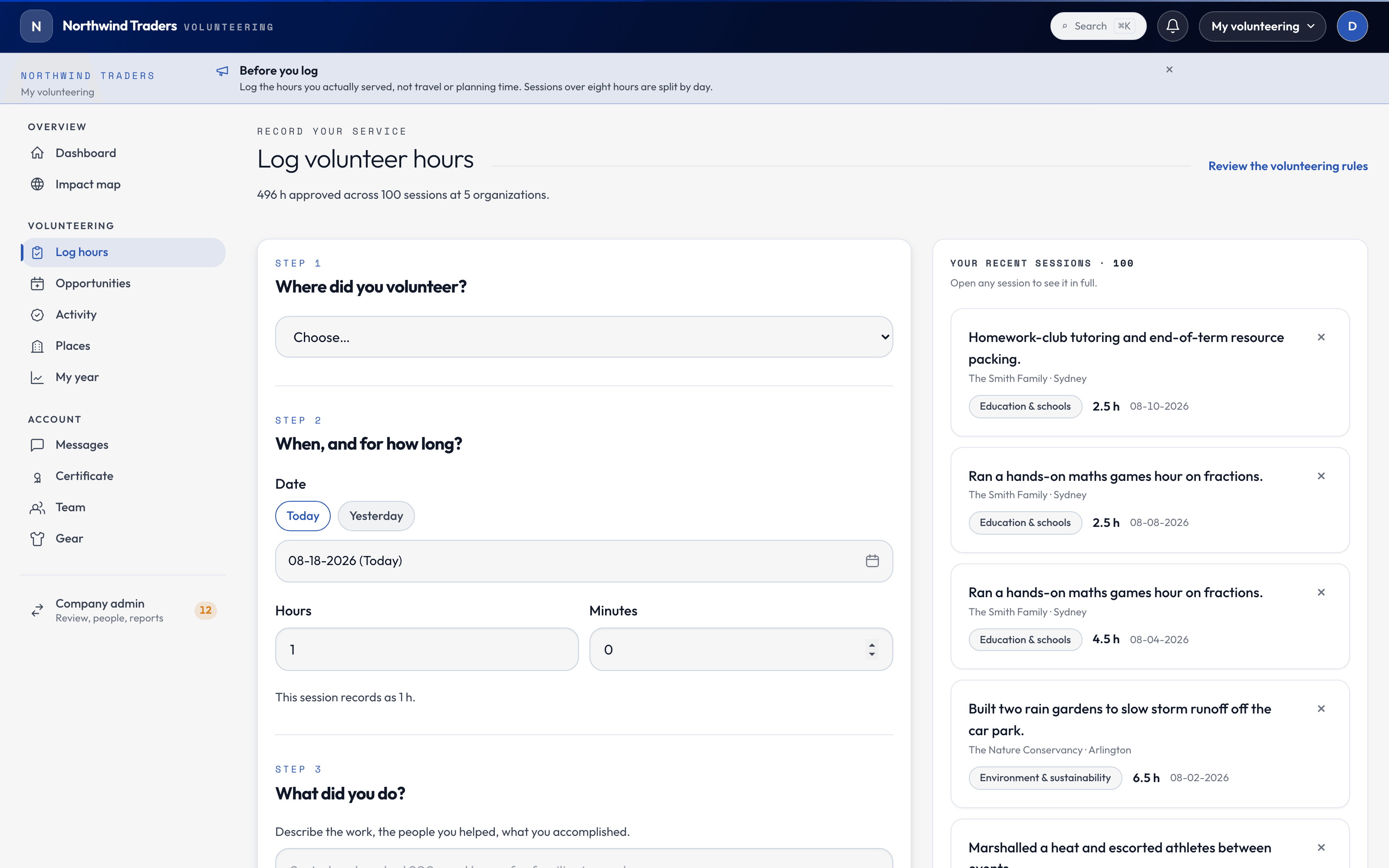
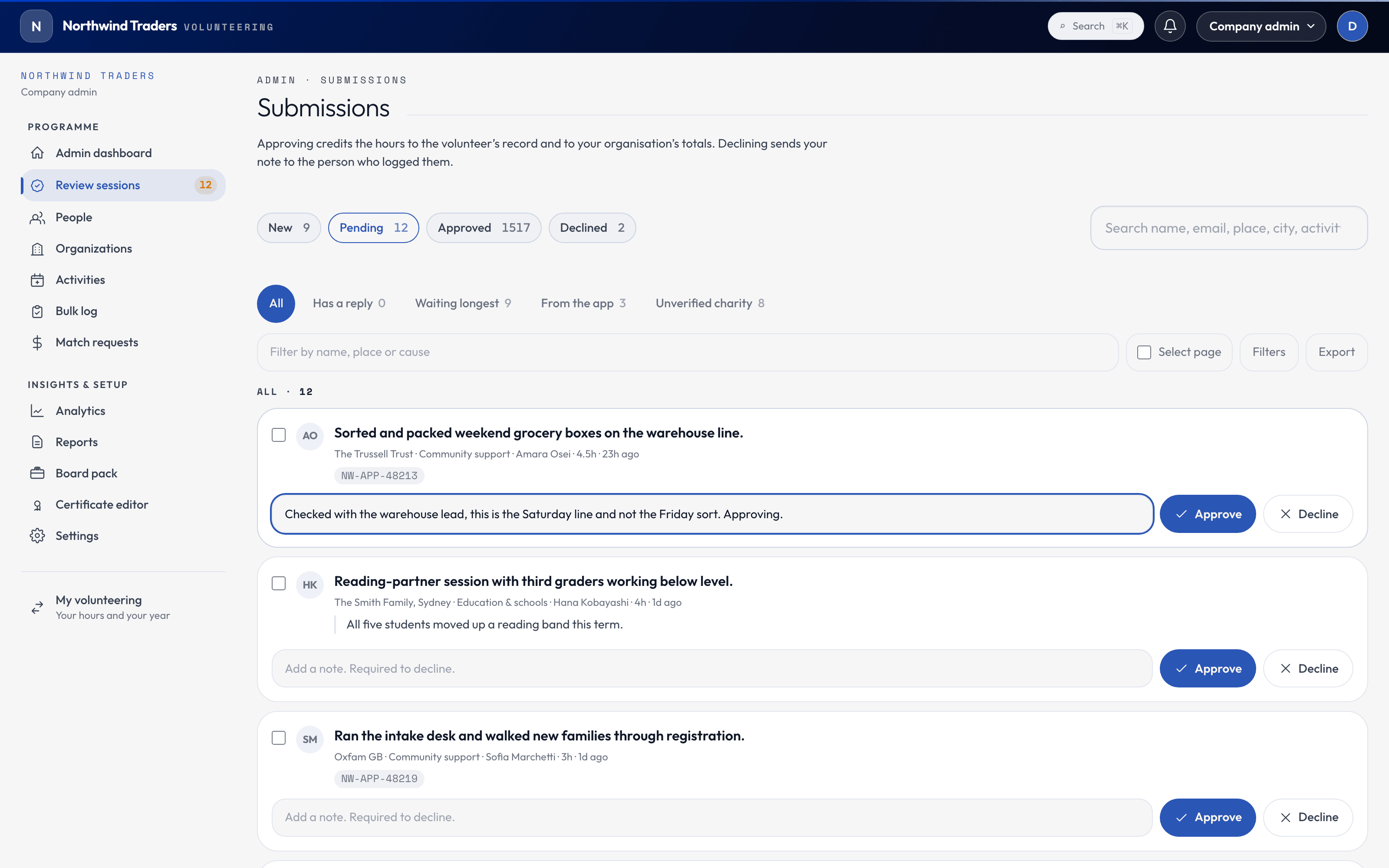
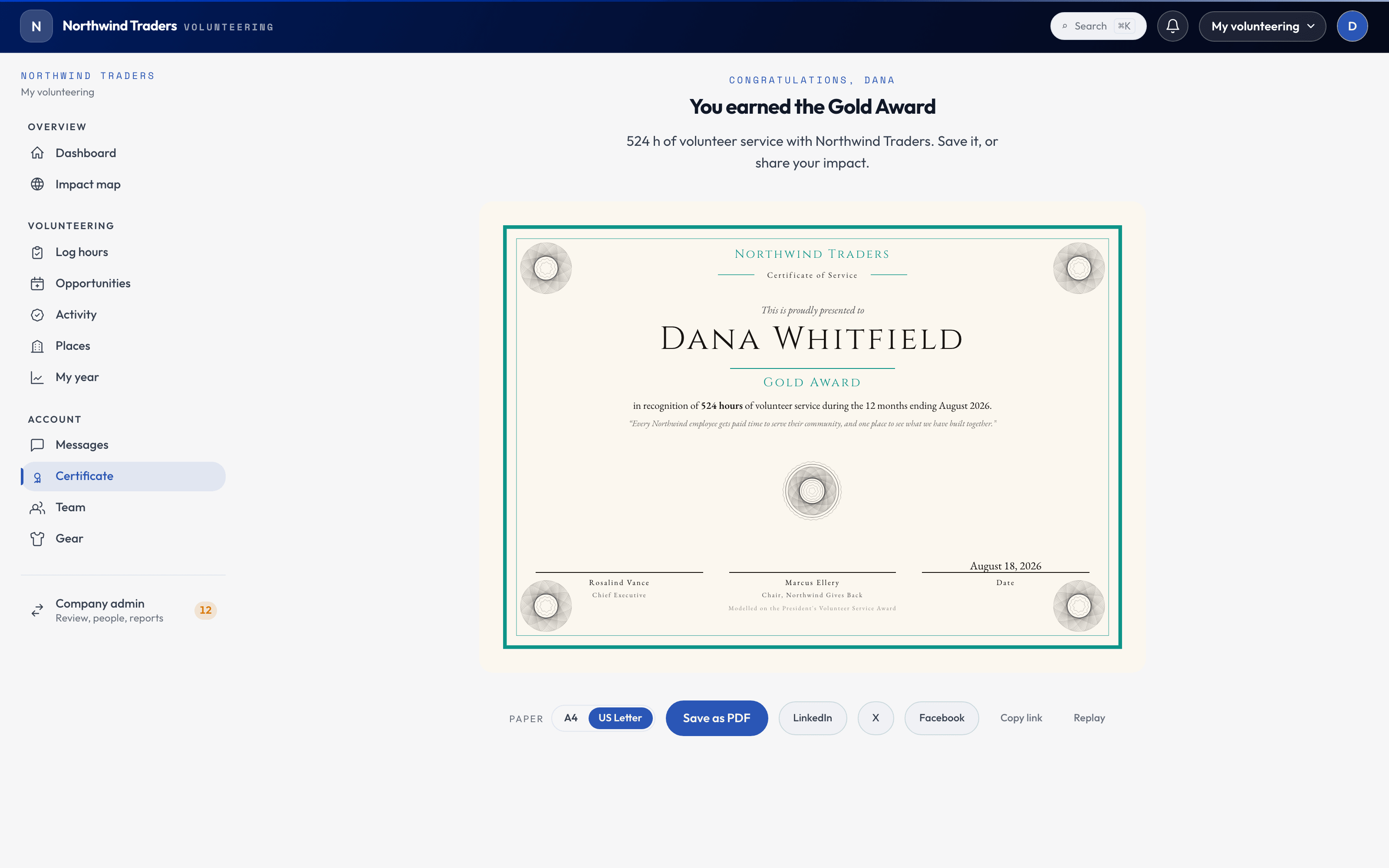
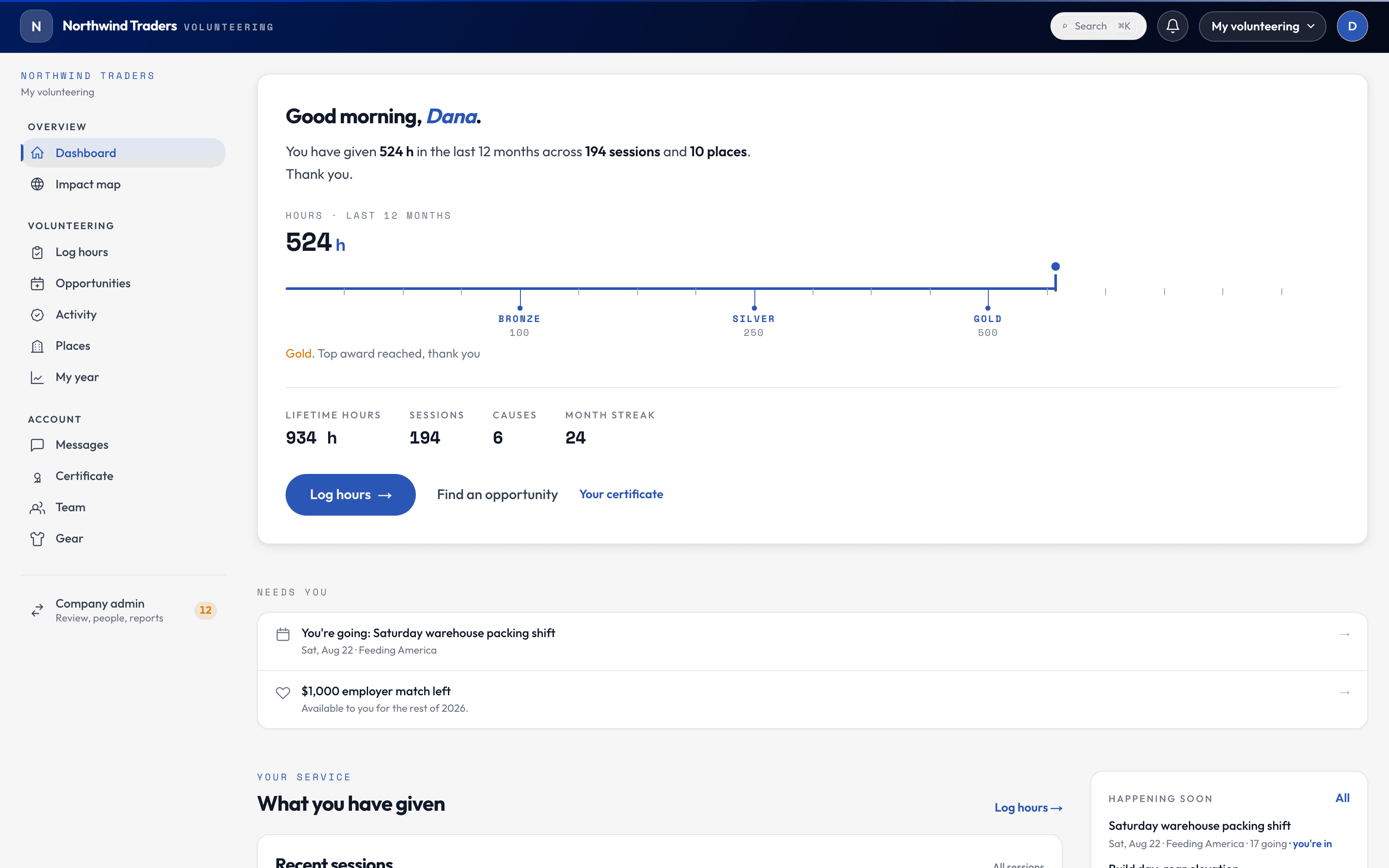
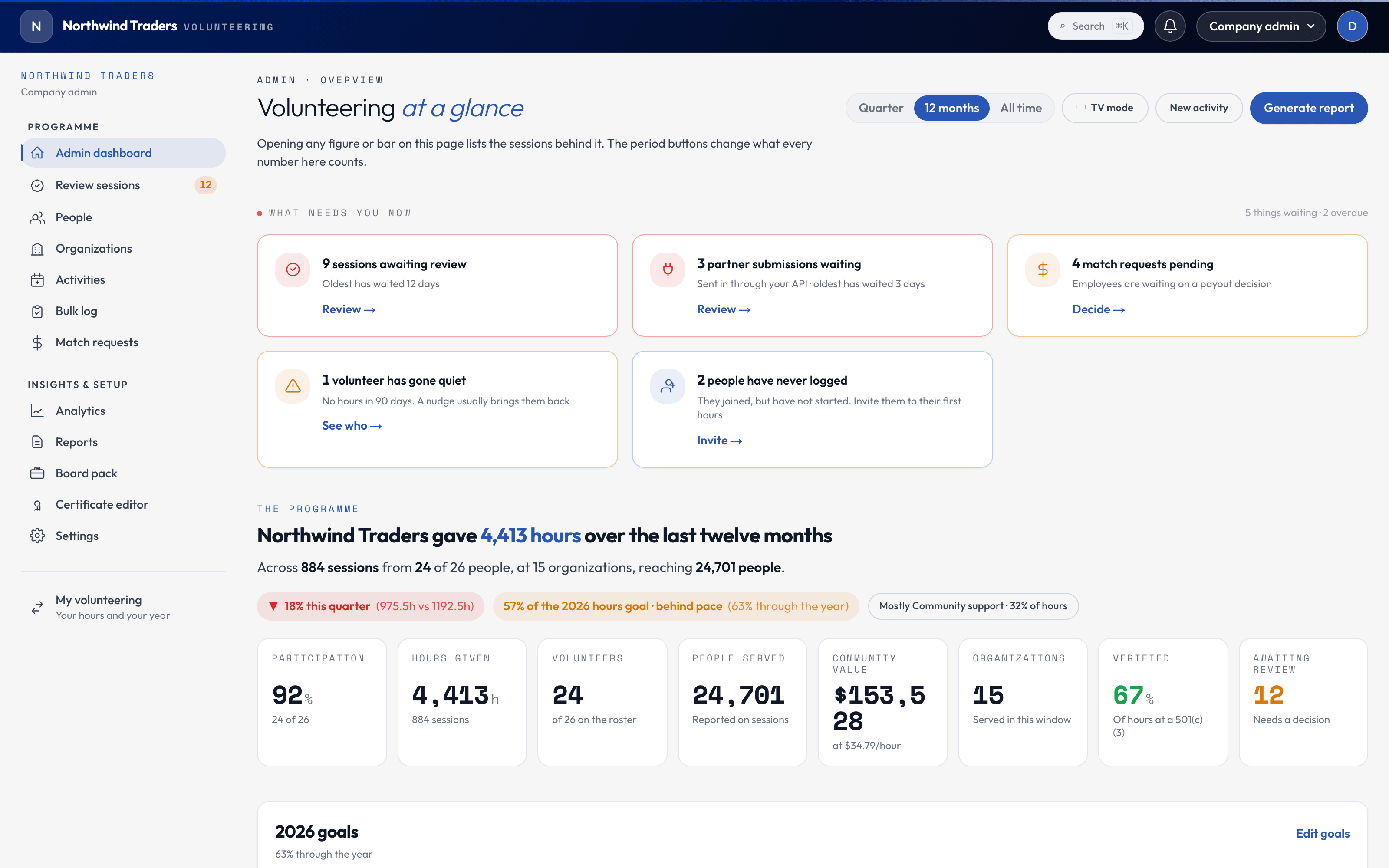
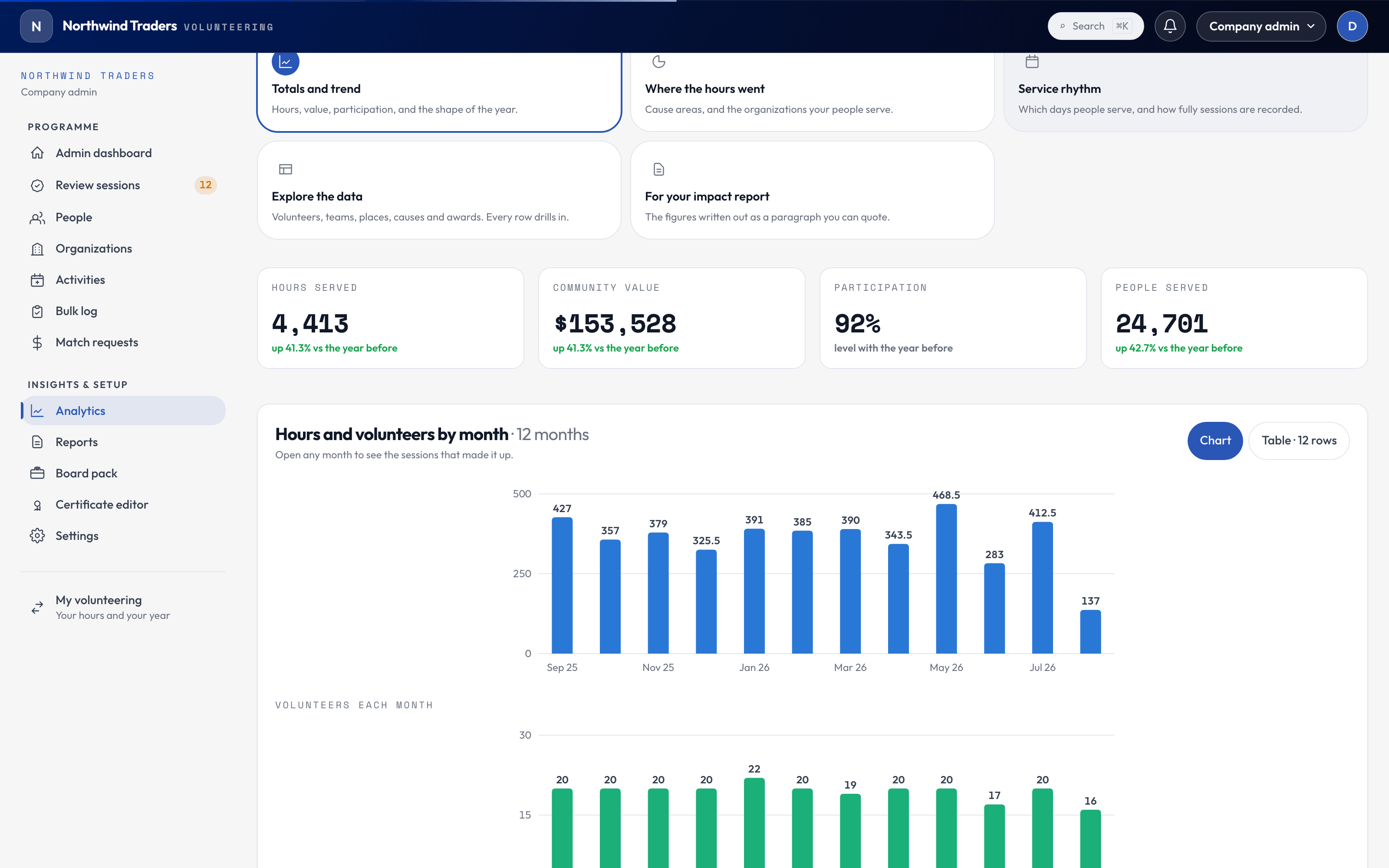
Corporate Giving Hub is a complete corporate giving platform. Employees log volunteer hours in a guided flow, administrators review and approve them, and the organization gets live analytics, recognition tools, printable award certificates, and exportable impact reports. Individuals and families can use it free, and organizations of any size can run their whole program on it.
Question 2
How do employees sign in?
Every mainstream option is supported: Google, Microsoft, and Apple sign in, one time email codes, SMS codes, and per organization SAML single sign on with providers like Microsoft Entra, Okta, and Google Workspace. Enterprises can route employees by work email domain straight to their own identity provider.
Question 3
Can it connect to our existing employee app or HR system?
Yes. A REST partner API lets your internal apps submit volunteer hours, provision employee accounts with HR attributes such as department, region, and cost center, and receive HMAC signed webhooks for approvals, rejections, messages, announcements, and schema changes. Form questions configured by your administrators flow to partner apps automatically.
Question 4
Does it support multiple languages?
The platform ships in 12 languages: English, Spanish, French, German, Portuguese, Italian, Chinese, Japanese, Korean, Arabic, Hindi, and Russian, with full right to left support for Arabic.
Question 5
Can we brand it as our own?
Yes. Each organization gets a white label portal on its own subdomain with its logo, brand colors, custom award tiers, and custom log questions. Your employees see your program, not ours.
Question 6
Where is our data stored?
All application data lives in the United States, in the US East region (Northern Virginia). The database is Neon Postgres on AWS us-east-1 with point in time recovery, the API runs on Fly.io in Ashburn, photos and media live in Cloudflare R2 in Eastern North America, and the web tier is served by Vercel with a global edge. Traffic is encrypted with TLS and data is encrypted at rest by every storage vendor.
Question 7
Can we feed the data into our own data warehouse?
Yes, three ways. CSV exports on demand from the reporting screens, the REST partner API for pulling records programmatically, and HMAC signed webhooks that stream every approval, rejection, message, and account event to your systems in real time. Together they keep a warehouse current without direct database access, which stays closed as a security boundary.
Question 8
What is the technology stack and how is security handled?
TypeScript end to end: Next.js on the web, a Hono and tRPC API, and Postgres through the Drizzle ORM. Identity runs on dedicated auth infrastructure with Google, Microsoft, and Apple sign in, one time codes, and per organization SAML. API keys are stored only as SHA256 hashes, webhooks are HMAC SHA256 signed with per organization secrets and every delivery carries a timestamp inside the signature so the receiving system can reject a stale or replayed one, admin actions land in an audit log, and a responsible disclosure policy is published at corporategivinghub.com/security.
Question 9
How is the platform maintained?
The codebase is version controlled and a release is cut by hand. There is no CI pipeline, so the full type check, test suite and production build is run before a release goes out rather than on every push. Database migrations run as a release step before the new machines take traffic, and a failed migration aborts the deploy so the version already running keeps serving. Health checks poll the API every fifteen seconds and pull any machine that cannot reach the database out of rotation, and our infrastructure providers apply security patches at the platform layer. Updates reach you without any action on your side.
Question 10
How are nonprofit organizations verified?
When a place is registered as a 501(c)(3), its EIN is checked against IRS records. Every place a team serves builds a profile with address, category, hours served, and top volunteers.